
SeamMaster® Ultrasonic Sewing Machines
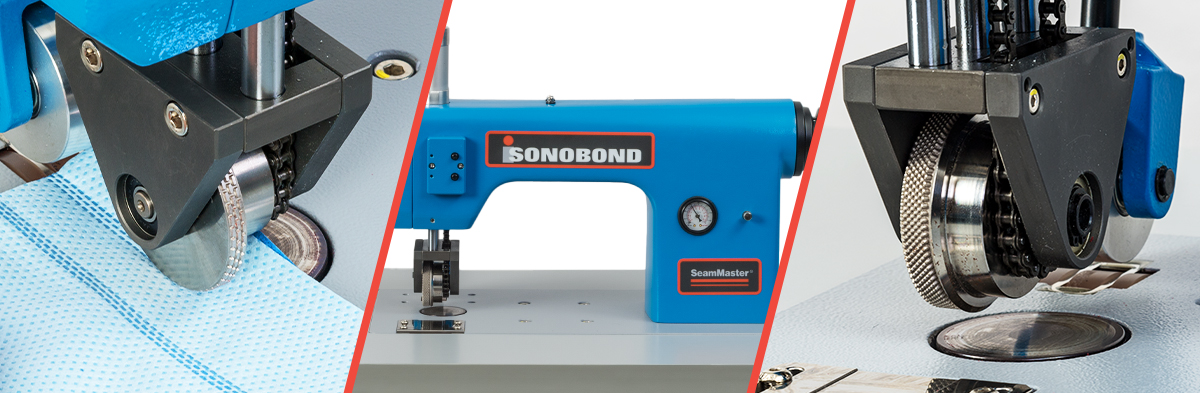
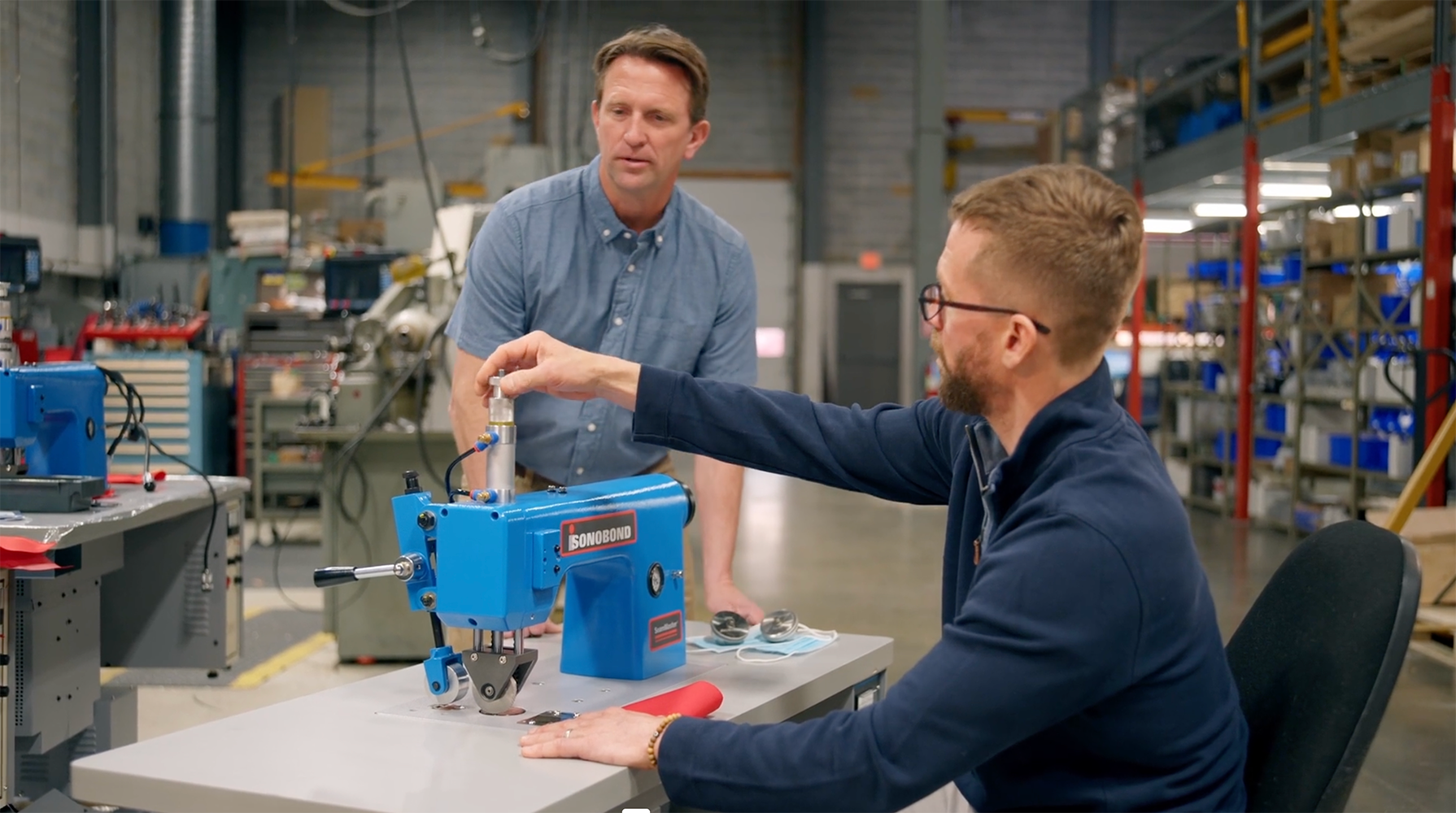
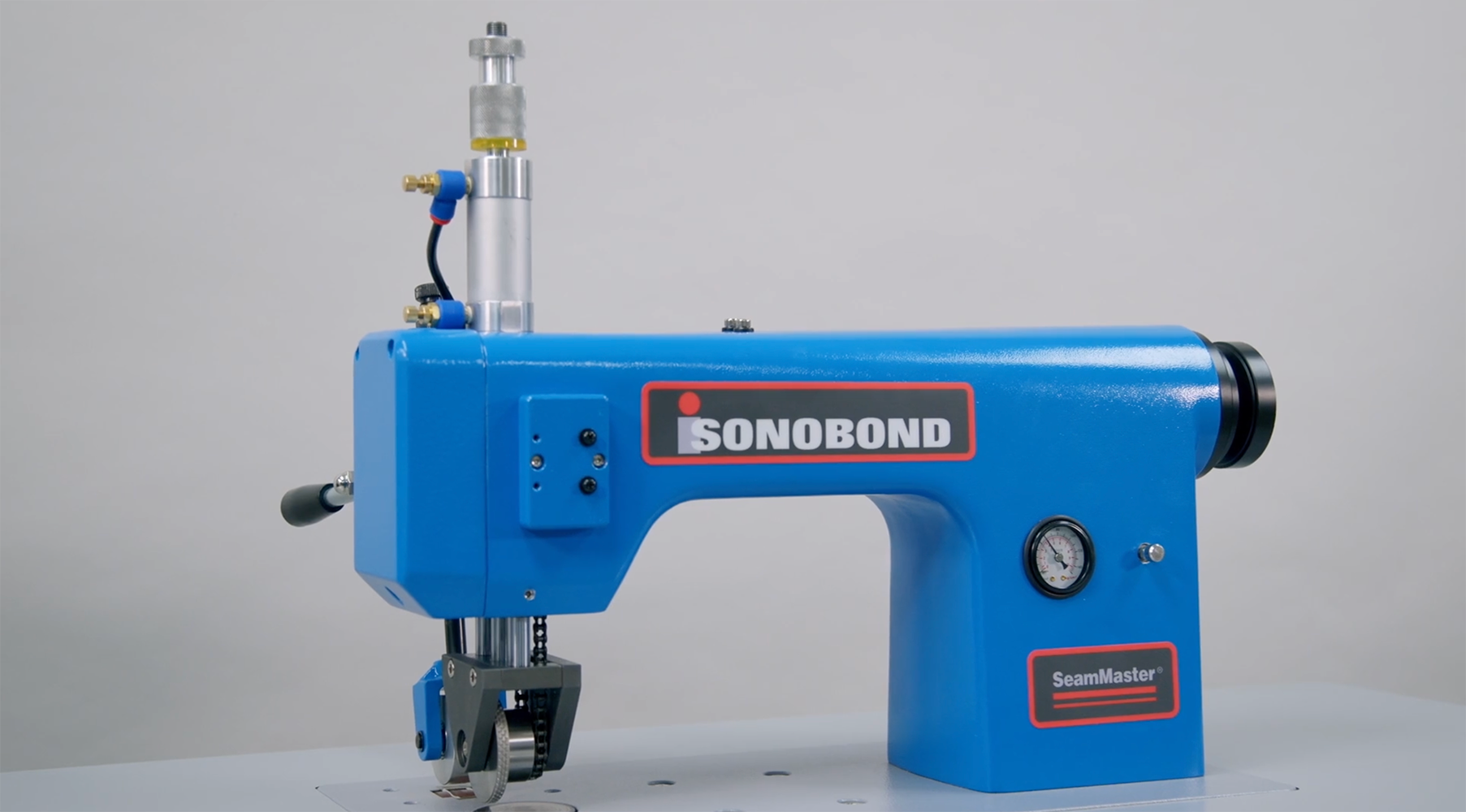
SeamMaster® ultrasonic sewing machines rapidly sew, seal and trim synthetic fabrics—without thread, glue or other consumables. Similar in appearance and operation to a traditional sewing machine, SeamMaster machines use ultrasonic energy instead of needle and thread to create strong, precisely fused seams. They can bond fabrics up to four times faster than conventional sewing and up to 10 times faster than heat-sealing and adhesive machines.
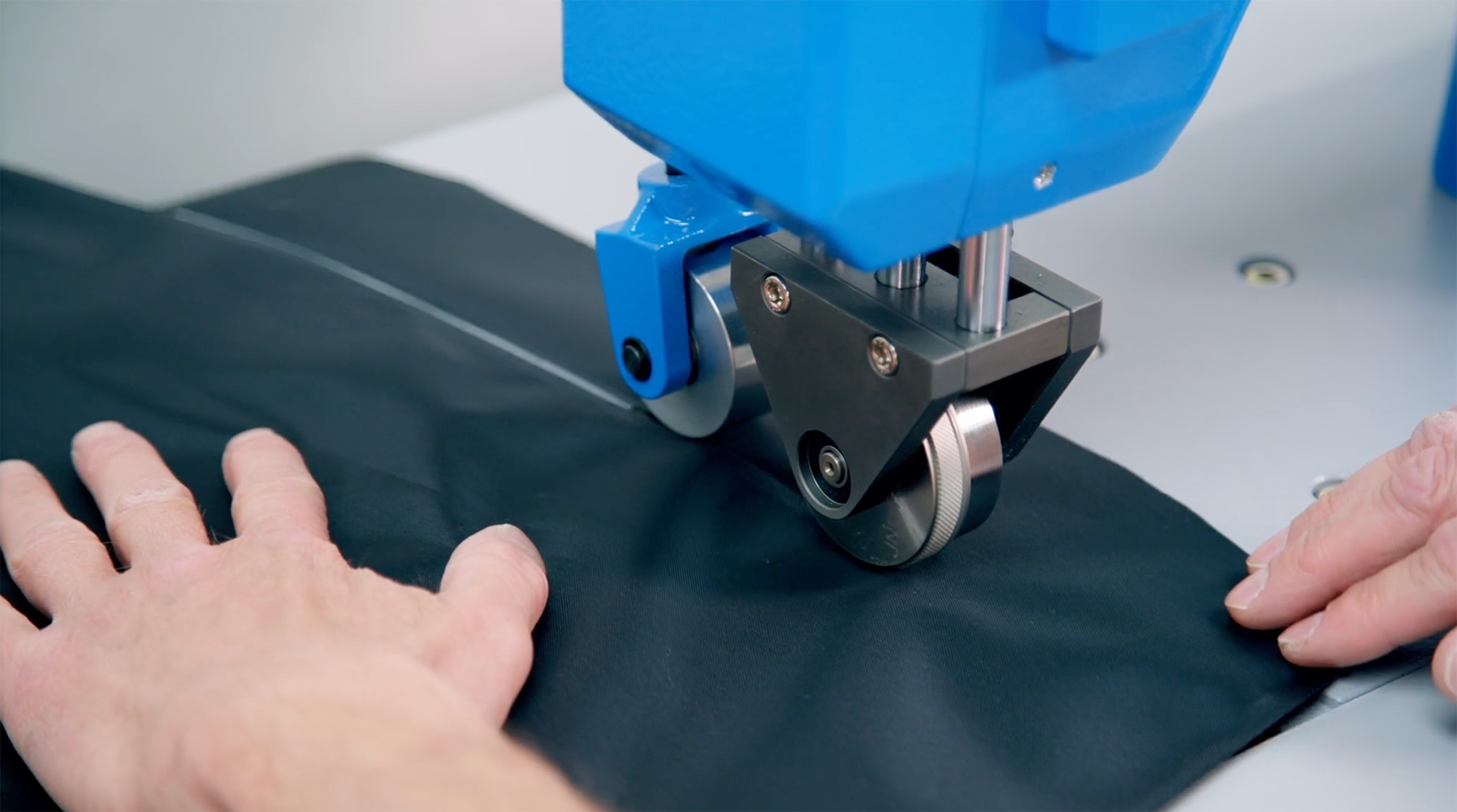
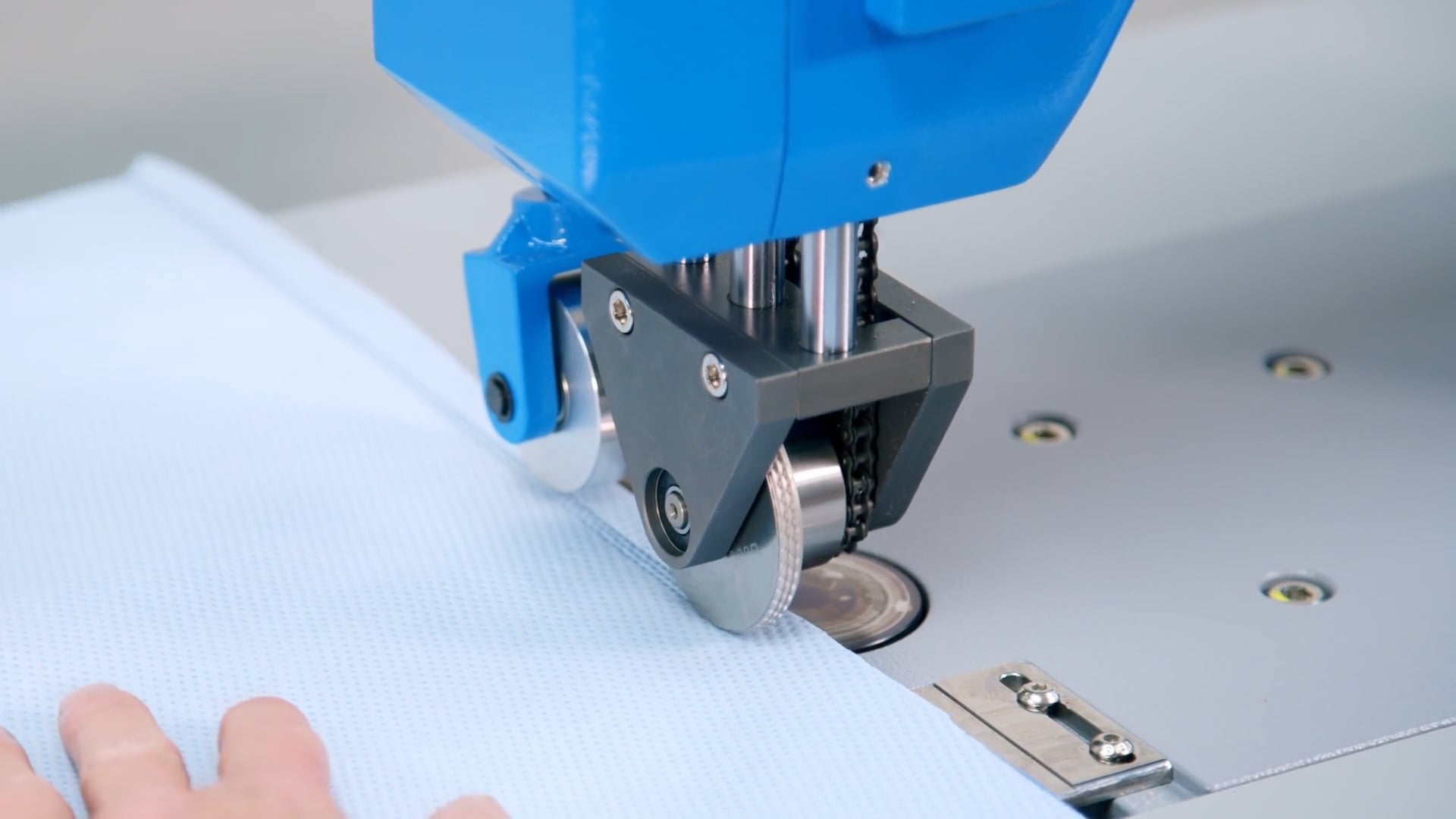
High clearance between the pattern wheel and horn makes the ultrasonic sewing machine well suited for hand-guided applications, bulky materials, tight tolerances and curved seams.
What Are the Advantages of Ultrasonic Sewing Machines?
Unlike conventional sewing, ultrasonic fabric bonding does not require needles or thread. SeamMaster machines eliminate:
- Needle and thread breakage
- Thread color changeover
- Thread unraveling
Eliminating these consumables and production interruptions can help manufacturers increase throughput while reducing labor and material requirements.
Designed for specialized applications in the textile, apparel, and engineered-fabrics industries, SeamMaster ultrasonic sewing machines support a variety of interchangeable pattern rollers for slitting, embossing, and “stitching” using interchangeable pattern rollers. Sonobond can also develop custom pattern wheels for specialized applications.
SeamMaster machines can complete bonding, sealing and trimming operations in a single efficient pass, helping reduce processing time, labor and material use. The precisely fused and sealed seams are also well suited for applications requiring barrier seams. The resulting seams are so precisely fused and sealed that they can assist in meeting OSHA regulations for barrier seams.
How Does an Ultrasonic Sewing Machine Work?
Ultrasonic sewing machines uses high-frequency mechanical vibrations to generate localized heat between layers of compatible synthetic material. Instead of puncturing the fabric with a needle and joining it with thread, the process fuses the materials together as they pass between the horn and rotating pattern wheel. This continuous rotary process enables manufacturers to create strong, sealed seams while simultaneously performing operations such as cutting, slitting or embossing, depending on the tooling and application.
What are Ultrasonic Sewing Machines Used For?
SeamMaster machines are designed for continuous ultrasonic bonding of compatible synthetic and nonwoven materials used in textile, apparel and engineered-fabric applications. The combination of continuous rotary bonding, high clearance and interchangeable tooling make them suitable for applications requiring sealed seams, clean edges or decorative patterns. Typical applications:
- Protective medical apparel and barrier products
- Body armor and ballistic-product covers
- Nonwoven products
- Filters and filtration products
- Industrial and engineered fabrics
- Synthetic textile assemblies
Features
SeamMaster Ultrasonic Sewing Machine Features
- Operates similarly to a conventional sewing machine for easy operator adoption
- Large pattern wheel and high clearance above the bench accommodate bulky materials and hand-guided operations
- Bonds, seals and trims compatible synthetic fabrics
- Virtually eliminates fraying and unraveling of bonded edges and seams
- Requires minimal operator training
- Accommodates interchangeable and custom pattern wheels
- Suitable for straight seams, curves and tight-tolerance applications
- Seals the inner shell of body armor, helping protect ballistic-resistant materials during required wet-conditioning testing. This enables the armor, with ballistic-resistant materials inside, to pass the current National Institute of Justice (NIJ) submersion tests. Per NIJ 0101.06, wet conditioning standards now require protection from submersion for 30 minutes rather than protection from a spray shower.